
Okinawa Institute of Science and Technology (OIST)
Enhancing Mobility: Unlocking the Potential of Global PhD Talent
A Global Hub of Research Excellence and Doctoral Talent Development
Okinawa Institute of Science and Technology (OIST) is
internationally recognized for its world-class research and
strong commitment to global diversity. With English as its
official language and more than half of its students and
faculty coming from overseas, OIST stands out as one of the
most unique graduate institutions in Japan.
Its
interdisciplinary research environment, combined with a
Principal Investigator (PI)-centered funding model, provides
young researchers with exceptional autonomy and opportunities
to take bold intellectual risks. In recent years, OIST has
also strengthened its collaboration with industry and career
development support, enabling PhD graduates to pursue diverse
career paths beyond academia.
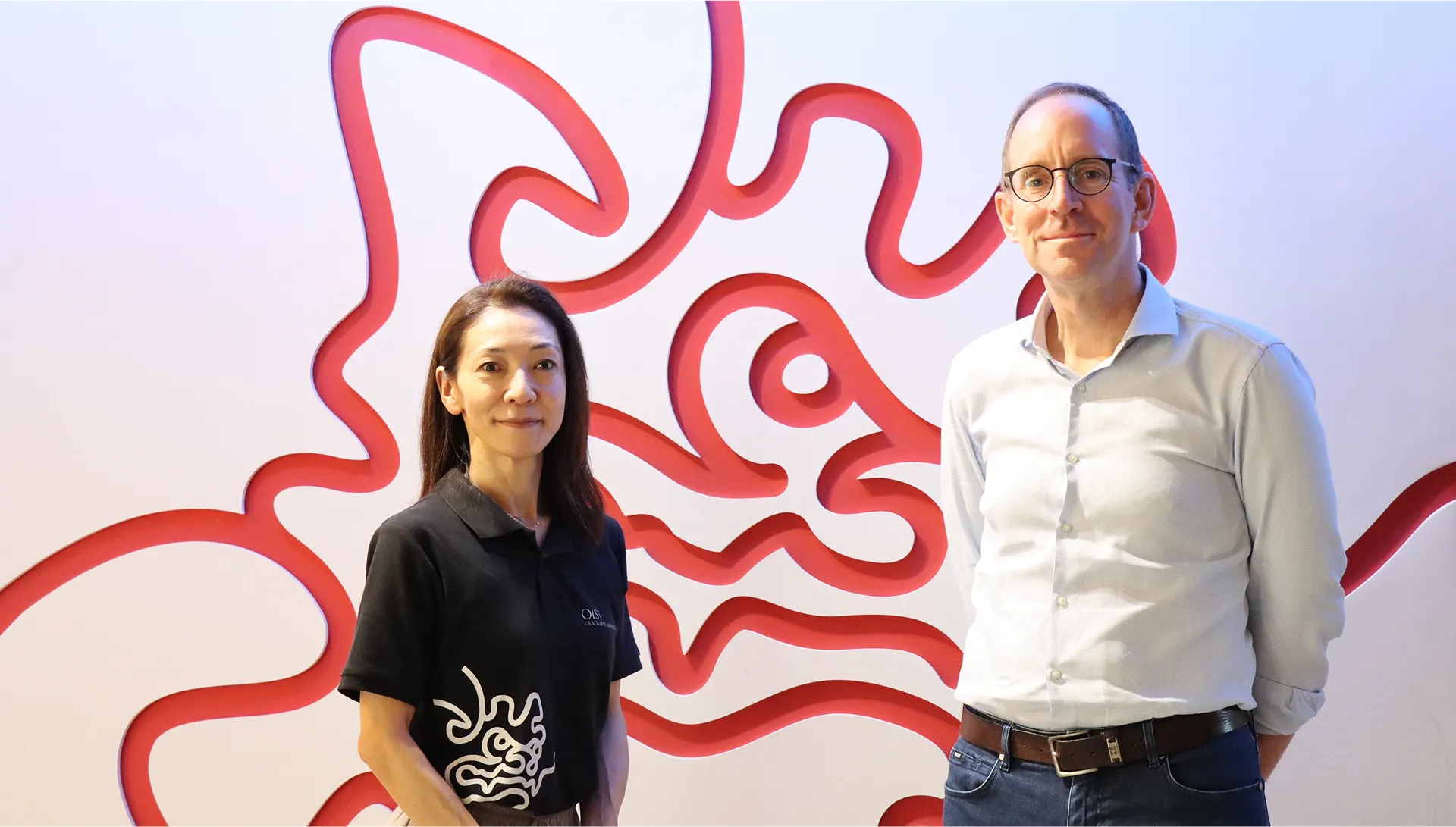
We spoke with Professor
Thomas Busch, Dean of the Graduate School, and Aya Puka,
Career Development Specialist, about the current landscape of
research, talent mobility, and the future of doctoral careers.
Q1. How do you view the current situation of researchers in Japan?
This mobility has been essential in advancing research. In contrast, Japan tends to have relatively low mobility. For example, it is not uncommon for a student to complete their undergraduate, master’s, and doctoral studies at the same university and remain there afterward.
While this is not inherently negative, it may limit exposure to new ideas and environments. Increasing mobility—allowing researchers to gain experience across different institutions and contexts—can significantly enhance innovation and research outcomes.
In short, Japan needs to strengthen mobility.
Q2. How should companies evaluate PhD talent?
The true value of a PhD lies not just in specialized knowledge, but in the ability to solve complex problems. Doctoral students spend 3–5 years tackling difficult research challenges, developing skills in analysis, creative thinking, and perseverance through trial and error.
PhD holders are individuals equipped with strategies and resilience to solve difficult problems—capabilities that are highly valuable for companies as well.
Q3. How are PhD holders valued in Europe?
EU research funding often requires companies to participate in research projects, which promotes strong collaboration between academia and industry. This has also led to the creation of many startups founded by researchers.
This ecosystem has proven highly effective in accelerating technological development and real-world application.
Q4. Why did you choose Japan and OIST?
However, OIST is truly unique on a global scale. One of its most attractive features is the PI-centered funding model. Unlike many institutions where funding is tied to specific projects, OIST provides funding directly to individual researchers.
Researchers are trusted to use these funds freely over a five-year period, with evaluation occurring afterward. This model, similar to systems like the European Research Council (ERC), has been highly successful in fostering innovation.
Q5. What challenges do international researchers face in Japan?
I have lived in Japan for 13 years, yet I still find it difficult to communicate fluently in Japanese. Ten years ago, I couldn’t even tell whether a letter I received was from a bank or a utility company.
This is why support systems are crucial—not only to attract international researchers, but to ensure they can continue working and living comfortably.
Q6. What career paths do OIST PhD graduates pursue?
Approximately 55% of recent graduates have pursued academic career paths, while many move into industry or startups. Previously, about 75% aimed for academia, but today the ratio is becoming closer to 50–50 between academia and industry.
This shift reflects OIST’s strengthened focus on industry collaboration and career support. Interest in working in Japan is particularly high among international students, though challenges remain in language, systems, and cultural understanding.
Q7. What is needed for Japanese companies to hire global PhD talent?
To bridge this gap, OIST organizes company visits, internships, and career fairs where students and companies can engage in meaningful dialogue. These are not just recruitment events but opportunities for mutual understanding—and they are already leading to job offers.
Q8. How should Japanese companies evolve moving forward?
Hiring international PhD talent is not just about recruitment—it is about bringing new perspectives into the organization. Diverse backgrounds enable companies to identify unseen challenges and opportunities, while improving decision-making quality and speed.
Companies should also engage earlier in the talent pipeline through collaboration with universities, mentoring, and internships.
If Japan truly aims to strengthen its global competitiveness and research capabilities, this cannot be achieved by universities alone—serious collaboration with industry is indispensable.
Q9. Finally, what are your expectations for the OIST/NAIST Salon?
Universities, companies, and government must work together, sharing responsibilities and learning continuously. I hope this salon becomes not just a platform for discussion, but a space that leads to real action and systemic change.
Through shared learning and collaboration among industry, academia, and government, we hope this becomes a platform for meaningful and practical discussions. OIST is fully committed to contributing to this effort.
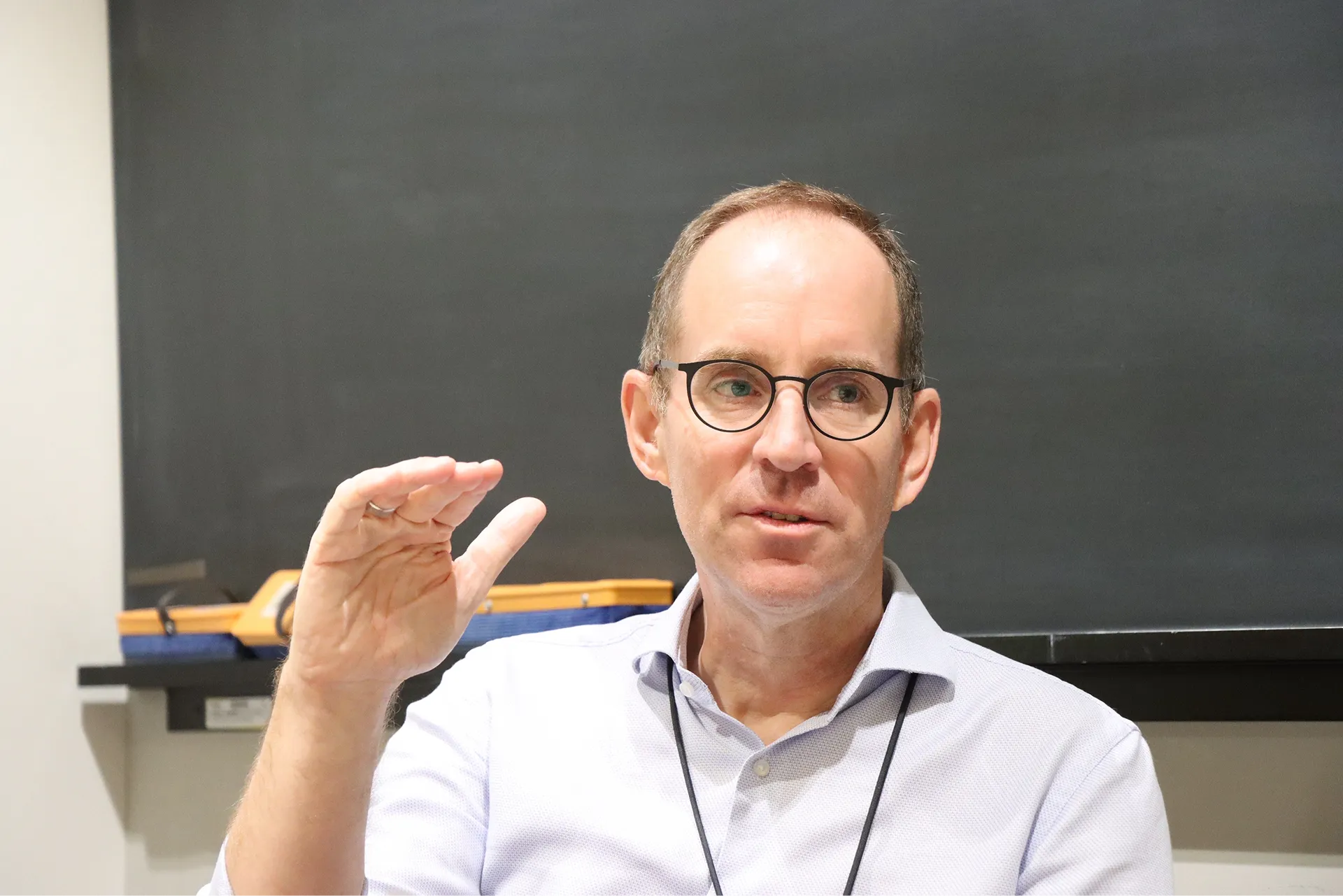
Thomas Busch (Dean of the Graduate School, OIST)
Professor Thomas Busch is a theoretical physicist and the head
of the Quantum Systems Unit at the Okinawa Institute of
Science and Technology (OIST). His research lies at the
intersection of quantum mechanics, ultracold atomic physics,
and emerging quantum technologies. Focusing on systems such as
Bose–Einstein condensates, Fermi gases, and low-dimensional
quantum systems, he explores how interactions, particle
statistics, and coherence give rise to complex quantum
phenomena. His work contributes to advancing quantum
simulation, quantum sensing, and quantum information
science.
He received his Ph.D. in theoretical physics
from the University of Innsbruck, Austria, and subsequently
held research and principal investigator positions at leading
institutions in Europe. Since joining OIST in 2011, he has
established an internationally recognized research program. He
has authored more than 180 peer-reviewed publications and has
made significant contributions to the fields of ultracold
atoms, quantum dynamics, and quantum thermodynamics. In
addition to supervising doctoral students and postdoctoral
researchers, he actively engages in international
collaborations. He has been serving as Dean of the Graduate
School at OIST since 2023.
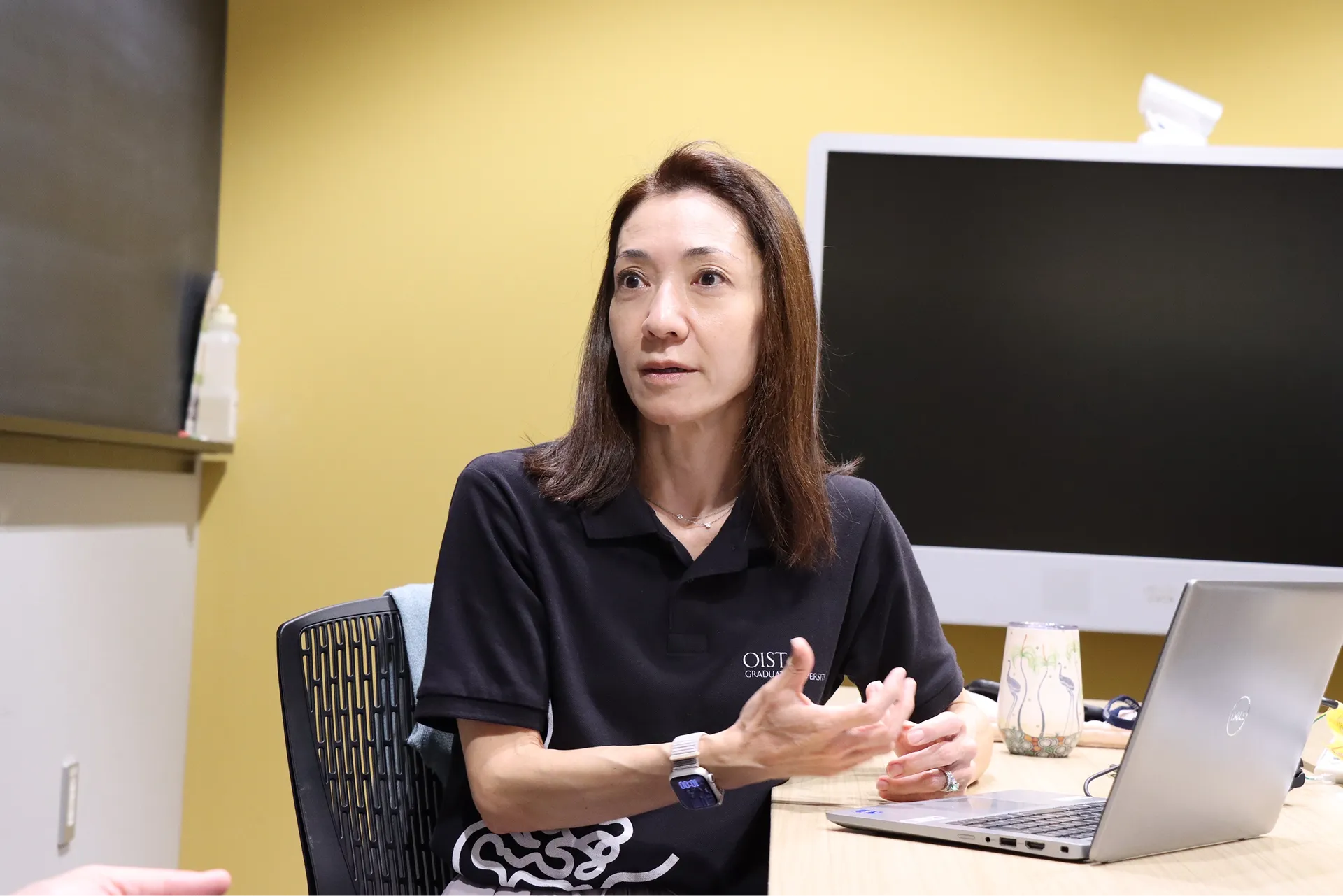
Aya Puca (Curriculum and Programs Section Manager, OIST Graduate School)
Aya Puca is a Professional and Career Development Specialist
at the Okinawa Institute of Science and Technology (OIST),
where she leads the design and implementation of career
development programs for doctoral students. She is also a
nationally certified career consultant in Japan.
After
eight years of experience supporting research laboratories at
OIST, she transitioned to her current role in 2019. Through
the Professional and Career Development (PCD) program, she
works to enhance not only research excellence but also
transferable skills essential for success beyond academia. She
is committed to supporting diverse career pathways and
empowering doctoral students to realize their full potential
in a wide range of sectors.
Guided by her belief that
“both research and life should be more free and creative,” she
actively develops and delivers innovative programs to
cultivate the next generation of globally capable and
impactful PhD talent.
Interview & Photography: Naoya Taniguchi (Nara Institute of Science and Technology)
