
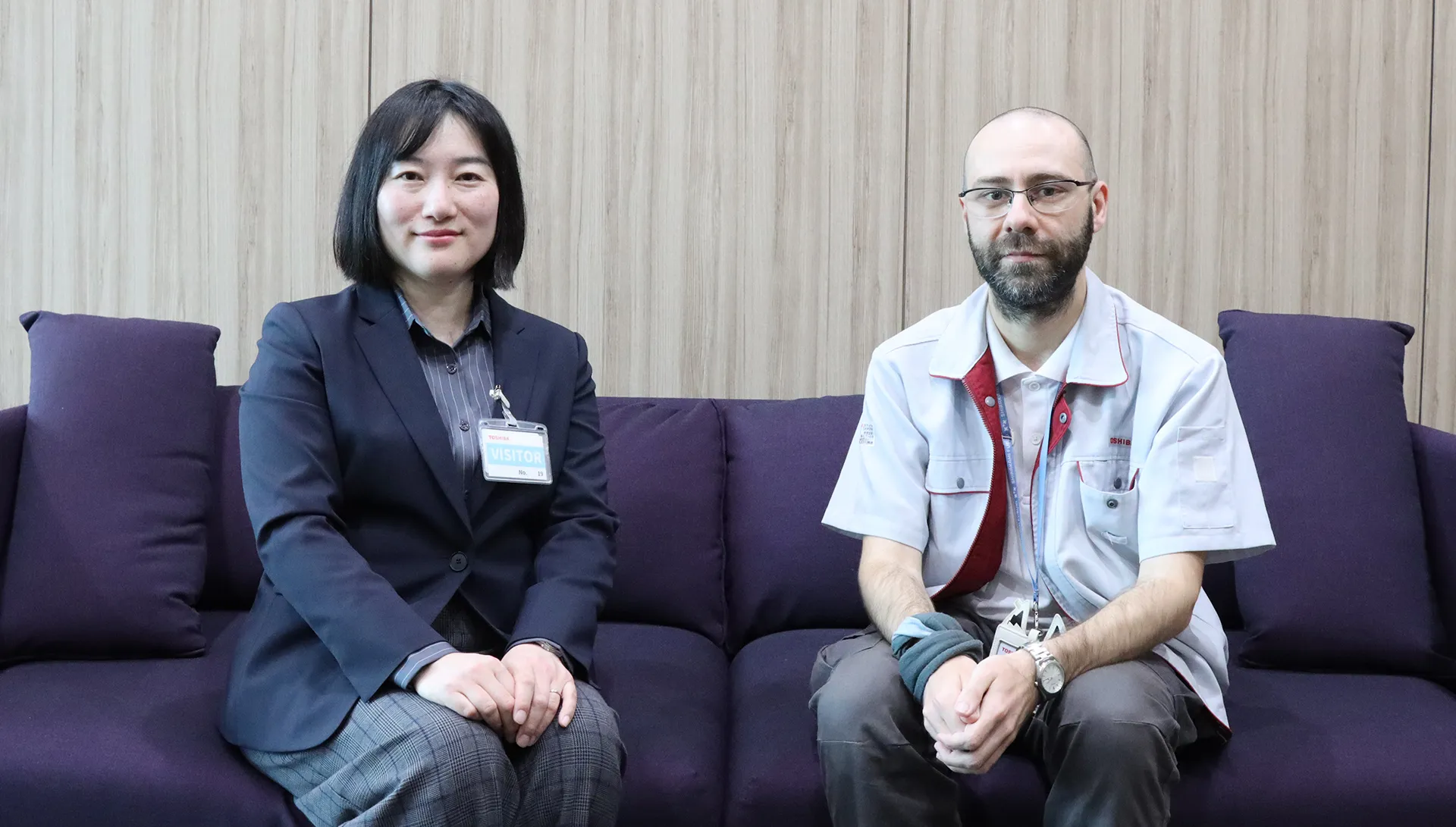
A Mathematician Making Japan His Home
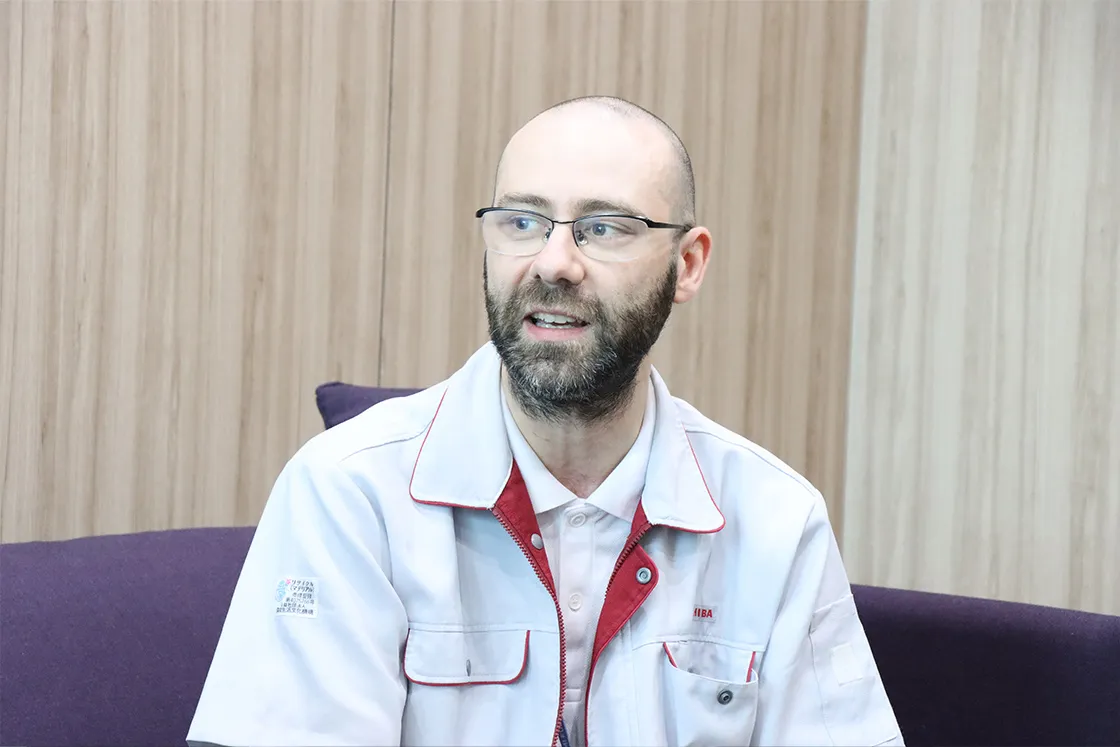
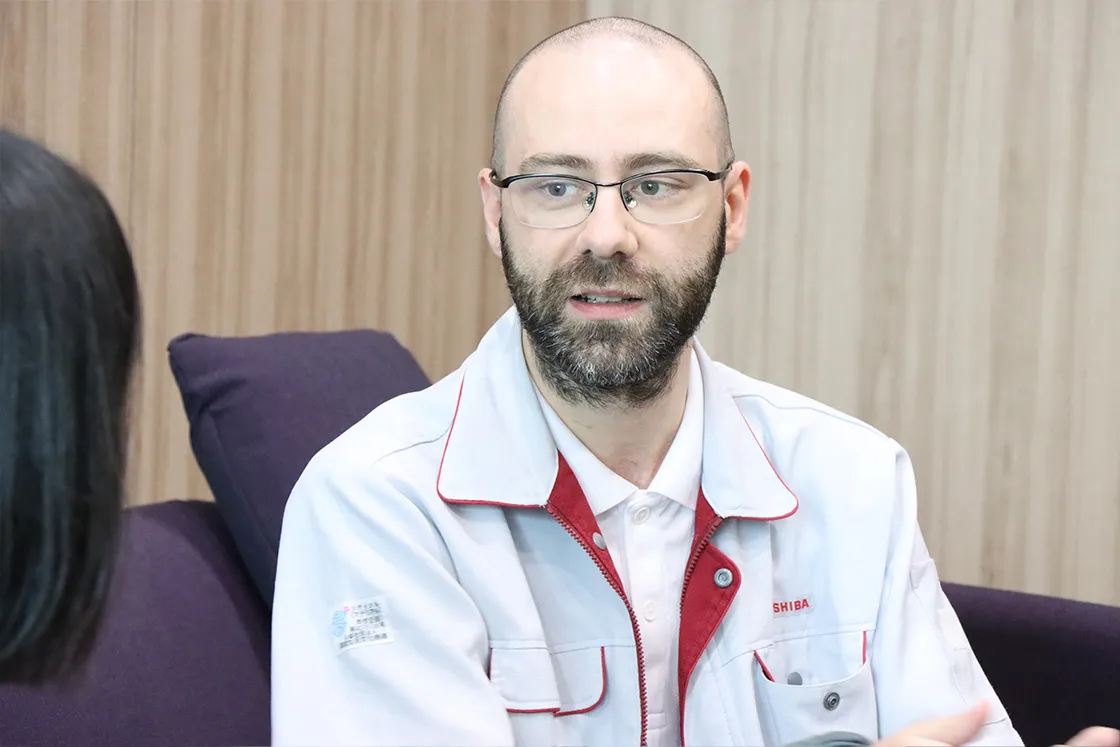
Dr. Albert Rodríguez Mulet
Analytics AI R&D Department, AI Digital R&D Center, Corporate Laboratory, Toshiba Corporation
After completing his master’s degree in his home country, he came to Japan, driven by his admiration for Japan and his passion for mathematics, and earned his doctoral degree at Hokkaido University. He has passed The Japan Kanji Aptitude Test Grade Semi-1. Completed the Doctoral Program in Mathematics, Graduate School of Science, Hokkaido University, Academic Year 2019.
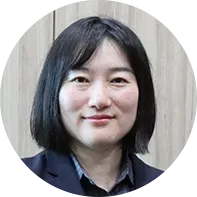
Mariko Katagaki(Interviewer)
Specially Appointed Assistant Professor, Doctoral Human Resource Development Unit, Center for Career Design, Institute for Academic Innovation, Hokkaido University
After working at private companies and as an administrative staff member at Hokkaido University, she assumed her current position in 2019. She is responsible for planning and implementing English-language programs to support graduate students’ career development. She also conducts research on the careers of international doctoral talent in Japan.
Coming to Japan and Choosing to Work at a Japanese Company
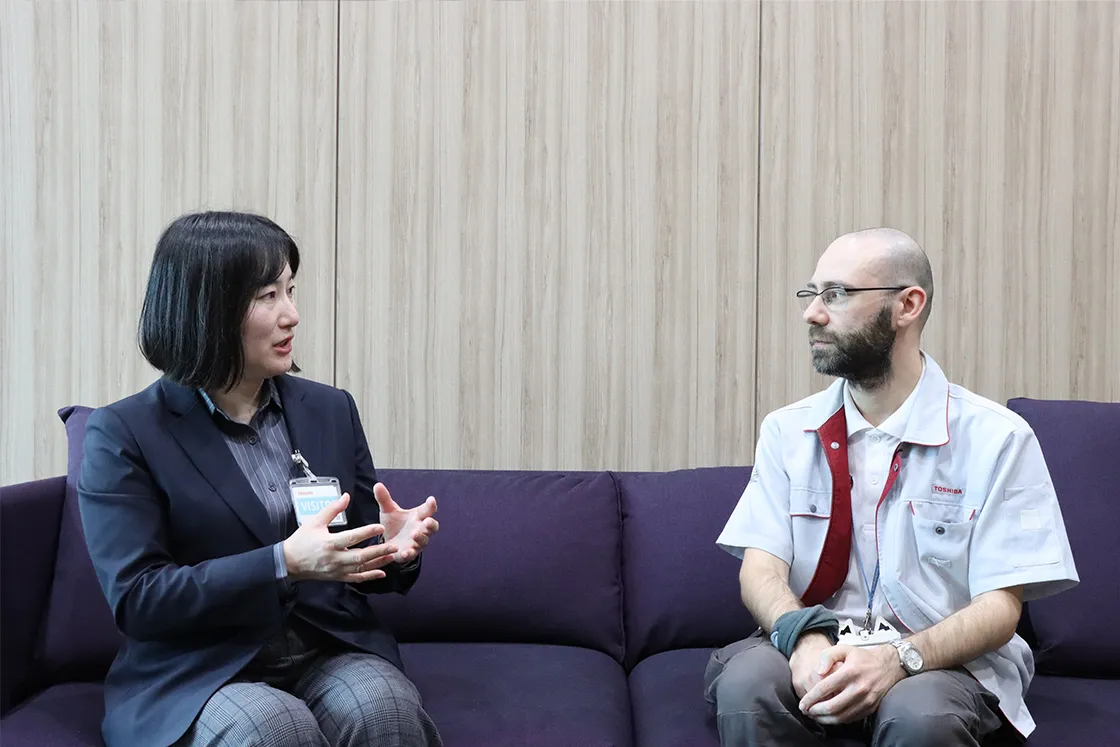
You came to Japan for your doctoral studies, didn’t you? What made you decide to pursue your PhD at Hokkaido University?

I had always admired Japanese technology. When I was a child, I saw news about robots and thought, “This is the future.” I completed my undergraduate and master’s studies in Barcelona, but I had a strong desire to earn my doctoral degree in Japan. I was interested in partial differential equations, and I knew that Hokkaido University had professors who were strong in that field, and that is why I applied. Japan had everything I was looking for: admiration, personal interest, and research strengths. For me, Japan was the only choice.
Had you already been studying Japanese before coming to Japan?
I passed JLPT N1 before coming to Japan. The direct reason I wanted to learn Japanese was video games. At that time, games were released first in Japan, then in the United States, and finally in Europe. I wanted to play them on the Japanese release date, so I started studying on my own when I was around 14 or 15. But back then, there was no generative AI, and I had no way to resolve things I didn’t understand, so I eventually gave up. Later, there happened to be a language school next to the university I entered, so I studied Japanese in their classes.
You have been conducting your research in Japanese since graduate school, haven’t you? Even after passing N1, you wouldn’t have learned specialized terminology. Did you face any difficulties after arriving in Japan?
From the very first day, all seminars were in Japanese, so I
learned the technical terms by checking with my professors. I
would ask things like, “How do you say this in Japanese?” or
“This is how it is written in English, but how would you write
it naturally in Japanese?” Through that process, I gradually
became able to discuss research in Japanese as well.
At first, however, everyday conversation was extremely
difficult. Even before coming to Japan, I had been watching
anime without subtitles, but voice actors are professionals.
Their pronunciation is clear and easy to understand. Real-life
Japanese speakers were different… I could not understand what
they were saying at all. There was someone in the same
graduate student room who seemed to share similar interests
with me, but at first I could only understand about 20% of
what he was saying. In a way, they really helped train my
listening skills.
When did you begin to think, “I want to work in Japan”?
It was in the second half of my second year in the doctoral
program. When I first came to Japan, simply coming here had
been my dream, so I had not thought much about what would come
next. Then one day, a senior student came to the laboratory
wearing a suit and said, “I’m under ‘shukatsu’ (job hunting).”
I was perplexed and thought, “What is shukatsu? You’re not
graduating until a year from now, but you’ve already started?”
In my home country, job hunting usually begins just before or
just after graduation. From that moment, I entered a period
where I felt I needed to think seriously about my own
future.
At the time, the unemployment rate for new graduates in my
home country was high, which made me conscious of career
stability. In addition, I felt that life in Japan suited me.
As a result, working in Japan became a natural choice for me.
I listened to opinions from both sides—whether to remain in
academia or join a company—and gradually began to think that I
might want to work in industry.
Even though Japan had been your only choice when you came here, it still took you a while to start thinking about working here. What attracted you to companies?
My field of specialization is 100% pure mathematics. I truly
enjoyed mathematical research, but it is quite abstract. I
began to feel that I wanted to connect that knowledge to
society in a form that was a little closer to reality and in a
faster way. That is what made me interested in companies.
Another reason was that, although this was only my personal view at the time, I had the impression that universities, while offering a great deal of freedom, also tended to involve long working hours compared with companies. I also wanted to have time for my private life, and that was another factor I considered when choosing my career path. In fact, I am now able to maintain a good work–life balance.
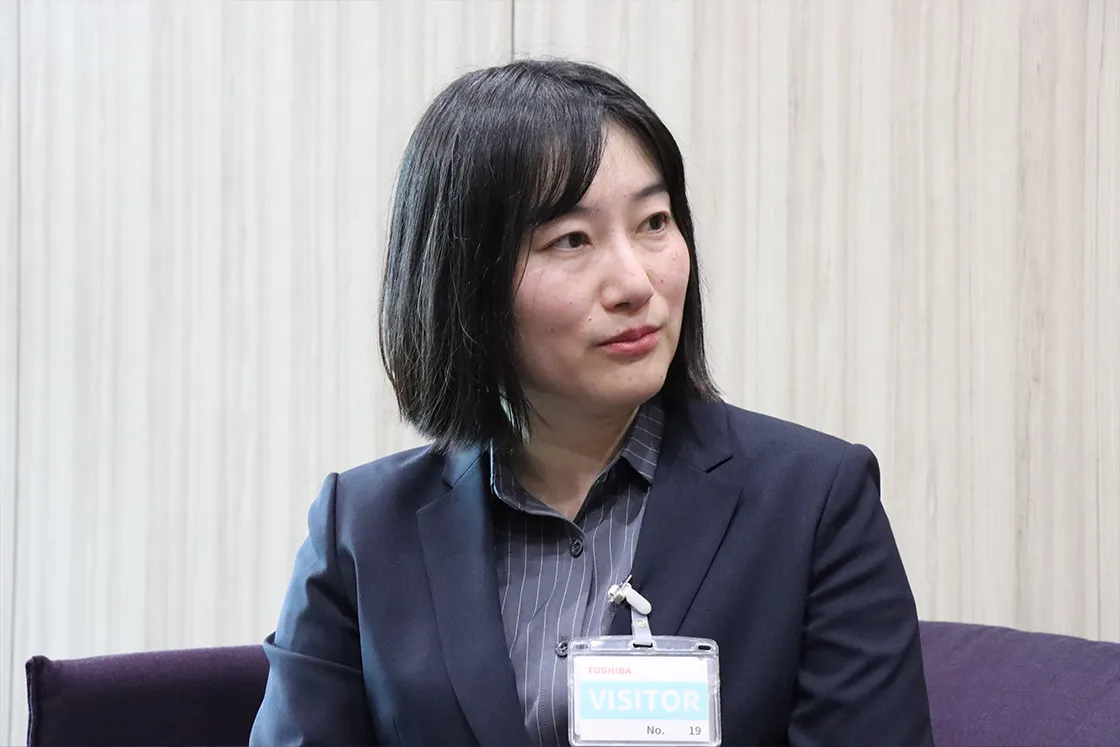
Expertise and the Perspective of a Corporate Researcher
It sounds like it was the perfect match. How did you encounter Toshiba?
It was through Hokkaido University’s “Akai Ito Kai” program*,
and I am very grateful for that. It was a place where doctoral
students could speak casually with people from companies, and
researchers from Toshiba were there. Through talking with
people from companies, I realized that they were trying to
solve social issues directly. The deciding factor for choosing
Toshiba was that I felt they valued me as a mathematician.
I was also impressed by Toshiba’s job matching system during the recruitment process. Under this system, applicants can have direct interviews with multiple departments they are interested in, allowing both sides to assess whether their technical expertise and research interests are a good match. Knowing that I could be placed in a department where my specialization would be fully utilized gave me a strong sense of confidence.
People often say that it is difficult for those in mathematics to find employment. What made you feel that you could succeed in a company?
At first, I had no idea where a mathematician could play an active role. Fortunately, around the time I was job hunting, theoretical analysis of AI was beginning to attract attention. In machine learning, it is extremely difficult to analyze why something works. Simply conducting comprehensive experiments and saying, “It worked,” can sometimes look weak as a research paper. But if there is a mathematical guarantee, the argument becomes much stronger. Companies were also beginning to take an interest in theoretical analysis, and there was a movement to hire mathematicians. I was able to ride that wave.
During your job search, did you face any difficulties because of your foreign nationality?
I cannot think of any particular difficulties. Toshiba also appeared to offer interviews in English for international applicants, but I chose to interview in Japanese. After joining the company, I went through the same training program as my Japanese colleagues, and my mentor treated me just like a native Japanese speaker from the very beginning. At the same time, colleagues whose Japanese is less fluent are also able to participate in regular meetings in English.
Is research at a company quite different from research during your university days?
As a student, I was able to focus almost entirely on my own research, and I had a great deal of freedom in how I managed my time. In contrast, research in a company involves not only conducting research itself, but also activities related to the business, collaboration with internal and external stakeholders, and various administrative procedures. I feel that the scope of responsibilities and the perspective expected of researchers are much broader in industry.
When I was a student, I hardly thought about it, but in a company, research is naturally carried out with profitability in mind—that is, with consideration for business needs and real-world implementation. My own research also needs to lead, in some way, to creating value for society.
One thing I misunderstood was that I assumed experienced professionals had already developed a perfect business vision, and that I would quickly be able to do the same after joining a company. In reality, it is not that simple. I have come to realize that launching research themes that can lead to new businesses require not only technical expertise but also a deep understanding of a wide range of social issues.
Settling in Japan: Different Goals, Different Paths
Do you plan to continue living in Japan?
I intend to stay in Japan permanently. Most of my hobbies are
things I can only do in Japan, I like Japanese food, and I
feel that Japan suits my personality. In Japan, there is an
appropriate sense of distance between people. At first, that
made it difficult and time-consuming to make friends, but once
I got used to it, I found it comfortable. I no longer have any
desire to return to my home country.
By the way, I came to Japan from my home country through a
MEXT scholarship. Among the international students who came
around the same time, a certain number did return to their
home countries. I think their reasons varied, but what left an
impression on me was that some people returned even though
they could speak Japanese, because they could not get used to
the sense of distance in relationships with Japanese people.
On the other hand, there were also people who were active in
Japan without relying much on Japanese.
So it is not simply the case that you can work in Japan as long as you can speak Japanese. Among international graduate students in degree programs in English, we often see cases where students want to find jobs in Japan but struggle with job hunting because they cannot speak Japanese.
It depends on why a degree program in English is being
offered. If the reason is simply that the university wants
international students, then I think that outcome is only
natural. Learning a language is difficult and time-consuming
even if you are interested in that country and its culture—and
without that interest, it becomes even more challenging.
Balancing language learning with research makes it even more
difficult. Everyday conversation and research discussion are
completely different worlds, which is why you need the
motivation to study Japanese while also doing research.
On the other hand, if everything in Japan were to be done in
English, then all Japanese people would need to improve their
English ability, and Japan’s circumstances are different from
countries such as the Netherlands, where many people can speak
English. Personally, I’d rather each country keep its own
uniqueness, and I think Japan is fine as it is.
At present, there are relatively few companies in Japan where employees can work entirely in English. As a result, it can be difficult for highly capable international graduates who speak only English to find employment with Japanese companies. Some of these graduates might have not yet learned enough Japanese and may still be undecided about whether they want to build a long-term future in Japan. I think it could be worth considering if companies offered opportunities to join projects where English is the primary working language. For example, fixed-term positions for specific projects could be an attractive option for international graduates who wish to spend several years in Japan before eventually returning to their home countries.
That is a very important point. We need to distinguish between
different cases. Discussions about supporting international
students in finding employment in Japan tend to swing between
two extremes: either “all international students should study
Japanese” or “Japanese companies should introduce
English-based hiring.” But it is necessary to discuss the
issue separately depending on whether the goal is long-term
retention or whether a short-term stay is also acceptable.
Thank you very much.
Finally, is there anything you would like to pass on to junior
international doctoral students?
I think the Japanese language is not merely a skill, but part
of the environment. Once you can use Japanese, not only do
your job options expand, but it also becomes easier to
interact with Japanese people, and I feel that you are more
easily accepted. In that sense, I think both work and daily
life become easier to enrich.
On top of that, if you can speak Japanese, I think it is also
important to think about what kind of career you want to
build. You do not need to force yourself to decide everything
from the beginning. But by thinking about what you want to do,
what you do not want to do, and whether you want to continue
doing it for a long time—while comparing those questions with
your expertise and interests—it may become easier to form an
image of your career. I hope you will find a path that allows
you to feel fulfilled, including in your life outside of work.
* Akai Ito Kai:A program organized by Hokkaido University in which doctoral talent and company representatives communicate directly. Through short talks by companies, poster presentations by doctoral students, and company booth sessions, the program emphasizes two-way matching. It has been held continuously since Academic Year 2006 and marked its 20th anniversary in Academic Year 2025. Since Academic Year 2019, an English-language version of Akai Ito Kai, called CAREER LINK MEETUP, has also been held.
